Check Out This Update | Plus, Subscribe To Get Weekly News Roundups

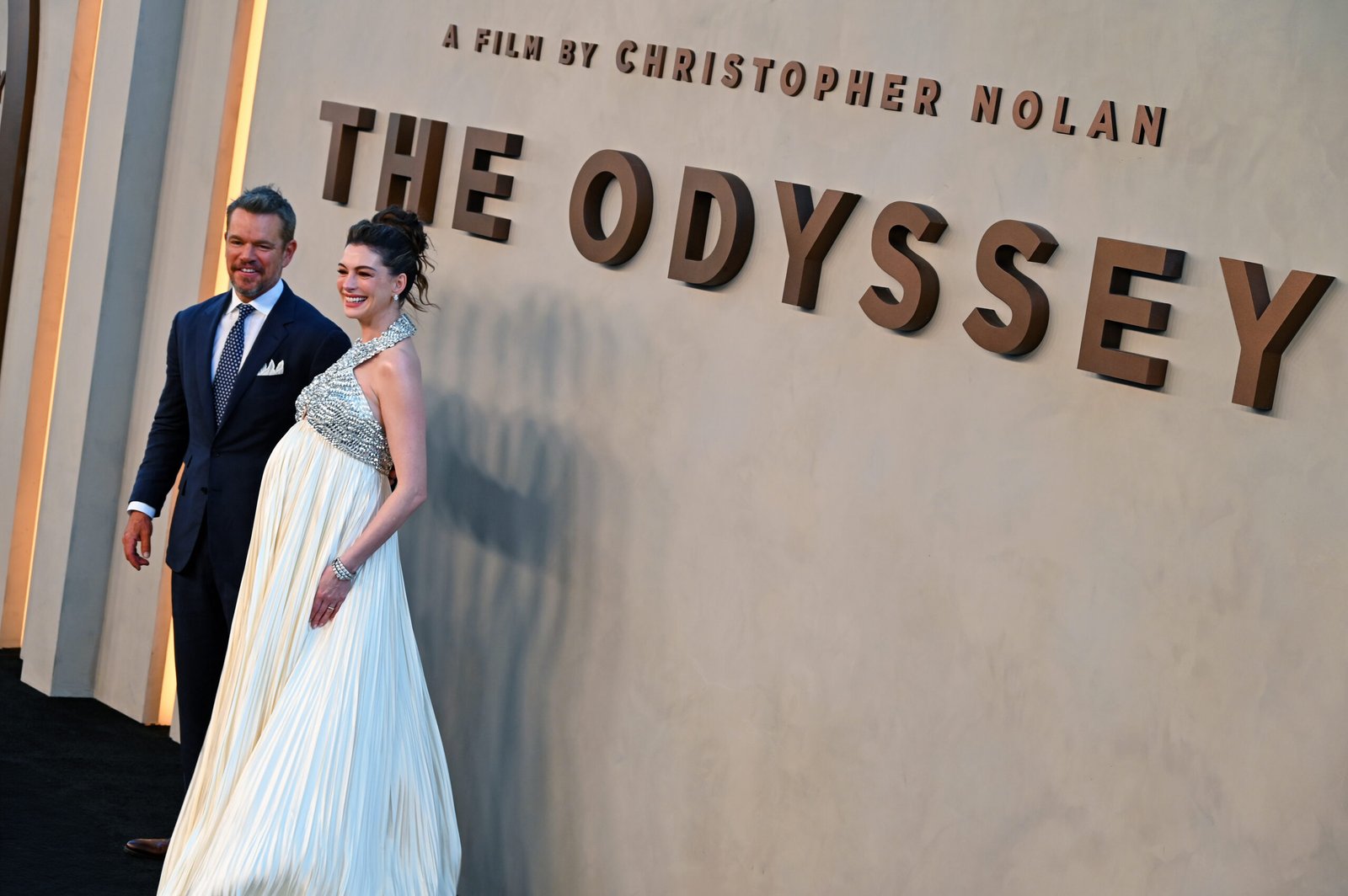

PHOTO: Matt Damon and Anne Hathaway at the The Odyssey premiere in NYC (Philip Romano / Wikimedia Commons)
This article represents the writer’s opinions and contains spoilers for the film The Odyssey.
How do you keep your soul in a world of war? That’s the question I believe Christopher Nolan’s bona fide summer blockbuster The Odyssey set out to answer. The film depicts the aftermath of a decade-long war between the early Greeks and Trojans where the sacred laws of hospitality and mercy were destroyed. Through one ruler’s long journey home, I was effectively transported back to ancient Greece.
The film begins with the king of the Greek island Ithaca, Odysseus (played by Matt Damon), journeying home after sneaking past the walls of the enemy, Troy, with a trick. A large wooden horse, disguised as a peace offering, hides Odysseus and his men inside its hollow belly. Not suspecting a threat, the Trojans open the gates, accepting the “horse” into their city. As hidden guests, the Greek soldiers desecrate the sacred offering to the goddess of wisdom, Athena (played by Zendaya), and violate the holy conventions of hospitality and mercy (“Zeus’ Law”) by destroying the city. The savagery that starts at the sacking of Troy spreads to the sea and Greece.
Throughout the film, Odysseus faces many mythical creatures as obstacles: cyclopses, giants, krakens, sirens and a witch. It takes cunning and courage for Odysseus to survive these encounters. After enduring these trials, including Poseidon’s storm killing his men and destroying his ship, he becomes imprisoned on an island without his memory by a nymph named Calypso (played by Charlize Theron) for seven years. Odysseus is only able to chart a way home when Athena, who acts as his conscience, pushes him to own up to the actions he took in Troy and asks Zeus to release him from his captor.
The film beautifully adapts the classic story of The Odyssey poem, bringing it to life in a way that immersed me in the world of Agamemnon, Odysseus and ancient Greece. It’s a grounded sequel to The Iliad poem, which depicts the end of the Trojan War. Odysseus is shown grappling with the consequences of the conflict — the years and lives lost — while his mind and body are stranded at sea and he struggles to remember who he is. Meanwhile in Ithaca, amid rumors of invaders from the sea, suitors are closing in to seize Odysseus’s throne and find any excuse to kill the young heir, Telemachus (played by Tom Holland). They demand that Queen Penelope (played by Anne Hathaway) choose a new king. Despite the events of the film taking place millennia ago, I saw my own struggles in the characters as they tried to find peace in a hostile world.
Walking out of the theater, I felt grounded. The film’s diverse cast bring unexpected honesty to their performances that helps their characters feel fully realized.
Lupita Nyong’o portrays Queen Helen of Sparta. Known as “the face that launched a thousand ships,” her legendary beauty, now covered in scars, reminds viewers that the war was fought in her name. Hathaway’s regal dignity as Penelope effectively conveys the tension of a wife waiting for a husband who may never come home while trying to hold onto the castle as a Queen when Ithaca needs a King. As the driving force behind the film, Damon embodies the violent and merciful nature of Odysseus. Zendaya appears onscreen like a recurring dream as Athena. She serves as Odysseus’s inner voice, urging him to find the courage to return home while reminding him of what transpired in Troy. Her presence is a reminder that it’s never too late to make things right, which in Odysseus’s case means fighting the suitors in his home and restoring “Zeus’ Law.”
This begs the question: Did The Odyssey successfully answer the philosophical question it poses? Yes. The film shows us characters being pushed past their breaking point but holding out for hope. To survive, every character is faced with narrow choices: tricks, mercy or violence. Reminiscent of real life, most of the challenges faced by them are not things that direct force can solve without sparking more war. The crux of The Odyssey is not the physical battles fought but overcoming internal struggles and having courage during unprecedented times.
The Odyssey holds a timely mirror to the viewer and our society, making it relatable for moviegoers struggling to accept their past wrong doings and inspiring for those wanting to find their courage.
Beyond the film positing how to keep your soul, it leaves us with other questions to ponder that speak directly to our lifetime: How do we remain connected when division tears communities apart? Is it possible to look past anger and fear to build a world of hospitality and mercy? To find courage to live in the world amidst pain and grief? To not succumb to cruelty?